Why AC Drain Lines Clog in Southwest Florida and How to Prevent Water Damage
A blocked condensate drain is one of the most common reasons an air conditioner stops working in Southwest Florida, and it is also one of the few problems a homeowner can genuinely prevent. Your system pulls gallons of water out of humid air every day and sends all of it down one narrow pipe. In this climate that pipe grows algae. Admiral Heating and Cooling of Naples wrote this guide because we clear these clogs constantly, and almost every one of them was avoidable. Here is what causes them, how the float safety switch protects your ceiling, what happens when nobody notices, and a flush routine that takes ten minutes.
Algae and Biofilm Are Why AC Drain Lines Clog in Florida
A condensate drain is not blocked by dirt in the way a sink is. It is blocked by something living.
The inside of that pipe is dark, permanently damp and sits at a mild temperature, which is close to ideal for algae and bacteria. They colonize the pipe wall as a slimy film, and that film catches everything the air handler sends down with the water. Dust that got past the filter, drywall grit, fibres from an attic, spores. The film thickens, sheds a piece of itself, and that piece wedges at the trap or the first elbow. Now the water backs up.
This is why a line that was clear in April is blocked in July. It is a growth process, not a one off event, and in Southwest Florida it never really stops. It is also why clearing a clog is not the end of the job. Unless the line is treated on a schedule, the film starts rebuilding the next day.
The Humidity Load Your Naples AC System Pulls Out Every Day
Your air conditioner does two jobs. It lowers the temperature of the air and it removes moisture from it. In this climate the second job is enormous.
Warm humid air passes over a cold evaporator coil, water condenses on the fins the way it does on a glass of iced tea, and runs into a pan below. On a humid summer day a normally sized home system pulls several gallons of water out of the air, all of it leaving through one small PVC pipe. That volume is why a small blockage becomes a big problem so fast.
It is also the reason the drain matters for air quality and not only for plumbing. Controlling indoor moisture is what keeps a house from growing mold, and the EPA's guide to mold and moisture recommends holding indoor relative humidity below 60 percent and ideally between 30 and 50 percent. A system that keeps shutting down on a blocked drain is not holding anything.
How a Clogged AC Drain Line Announces Itself
The warning signs are consistent and most of them are visible from a hallway.
Water on the floor near an indoor air handler, or a damp patch on the closet wall behind it. A musty smell when the system starts, which is standing water sitting in the pan. A ceiling stain under an attic unit. Water dripping from a small pipe stub outside near a window, which is the secondary drain telling you the primary is already blocked. And the most common sign of all, a system that will not start in the middle of August even though the thermostat is calling for cooling.
The Safety Float Switch That Shuts Your AC System Down
That last symptom deserves its own explanation, because it sends a lot of people looking for a dead compressor when nothing has failed.
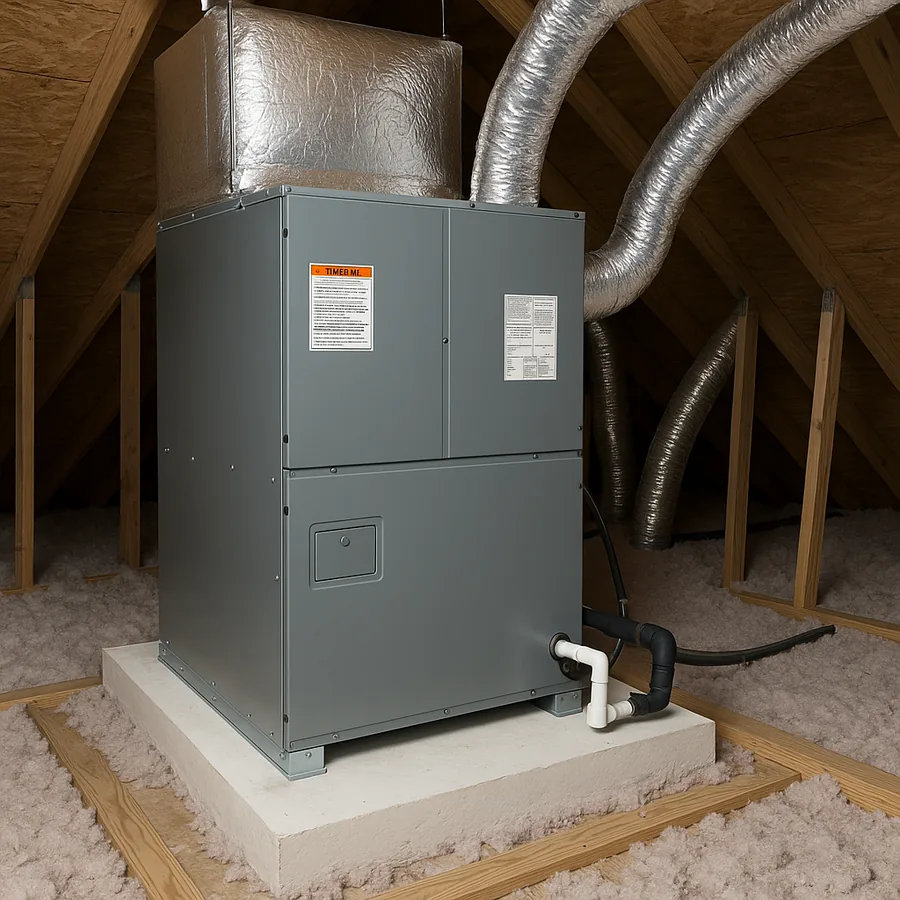
A float switch is a small water sensor wired into the low voltage control circuit. One version sits in the secondary drain pan under an attic air handler. Another version is plumbed inline near the primary drain. When water backs up and lifts the float, the switch breaks the circuit and the system stops. It stops on purpose. Cooling makes condensate, so the only way to stop water arriving at a blocked drain is to stop cooling, and the switch does that before the pan overflows into your ceiling.
So an air conditioner that suddenly will not run in peak season is very often a tripped float switch rather than a failed unit. Clear the blockage, the water level drops, the float falls, and the switch resets itself with no part replaced. Never jumper a float switch to get cooling back. It is the one component standing between a clogged pipe and a repair with a drywall contractor in it.
Water Damage Is What Follows a Missed AC Drain Line Clog
Most Naples homes put the air handler in an attic or a closet, which means the water has somewhere expensive to go.
An attic unit sits over drywall, insulation and flooring. A secondary pan with its own drain line is the designed backup, routed deliberately to somewhere you will notice, usually a stub over a window. Treat a drip there as an alarm rather than a curiosity. If both paths are blocked or the pan has rusted through, the water goes into the ceiling, and by the time a stain shows the insulation above it has been wet for a while.
Then there is the part that outlasts the repair. Wet cavities in a humid climate do not dry quickly, and that is how a drain clog becomes a mold remediation. Many homeowner policies also treat a sudden discharge differently from damage that developed gradually, so it is worth reading yours. A ten minute flush is cheap next to any of that.
A Flush Schedule for Your AC Condensate Drain You Can Keep
A schedule you will actually follow beats a perfect one you will not. Monthly through the cooling season from roughly May to October, and quarterly the rest of the year, is realistic and it is enough for most Naples homes.
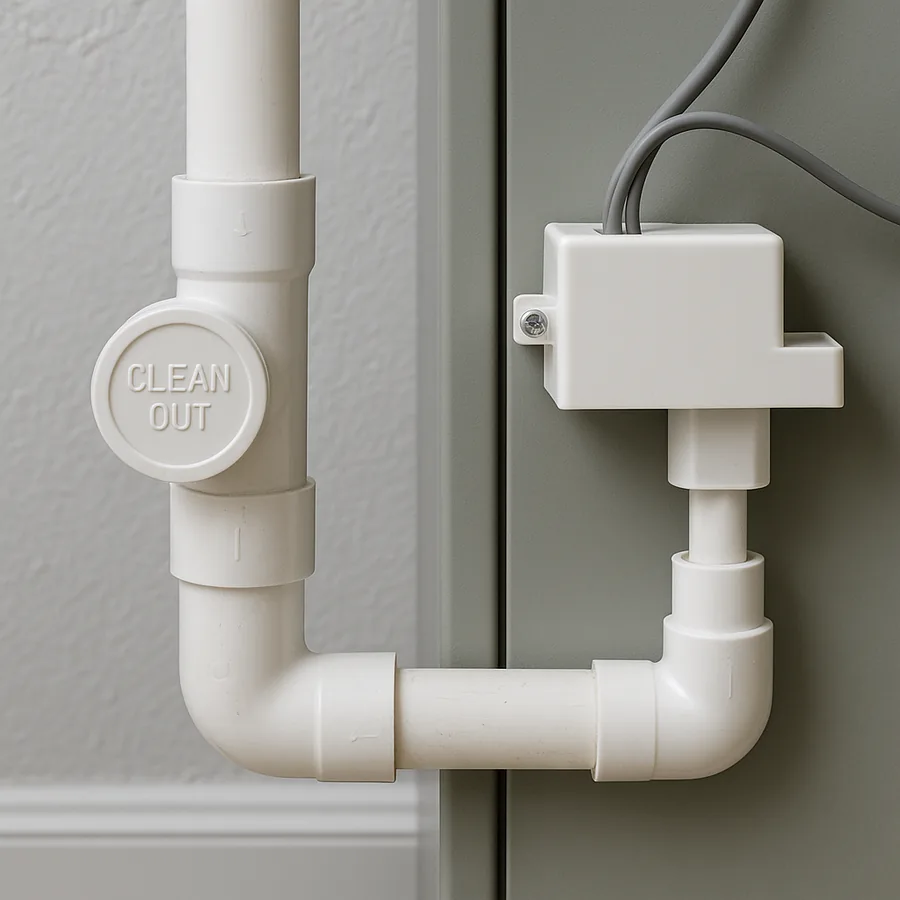
The homeowner version takes about ten minutes. Switch the system off at the thermostat and at the breaker. Find the drain line where it leaves the air handler and look for the cleanout, which is usually a tee with a cap on it. Take the cap off. Pour about a cup of distilled white vinegar into the line and leave it for half an hour, then replace the cap, restore power and check that water is running freely out of the termination point outside. If the line is already blocked, a wet or dry vacuum held against the outdoor termination with a rag sealed around it will often pull the plug out in a few seconds.
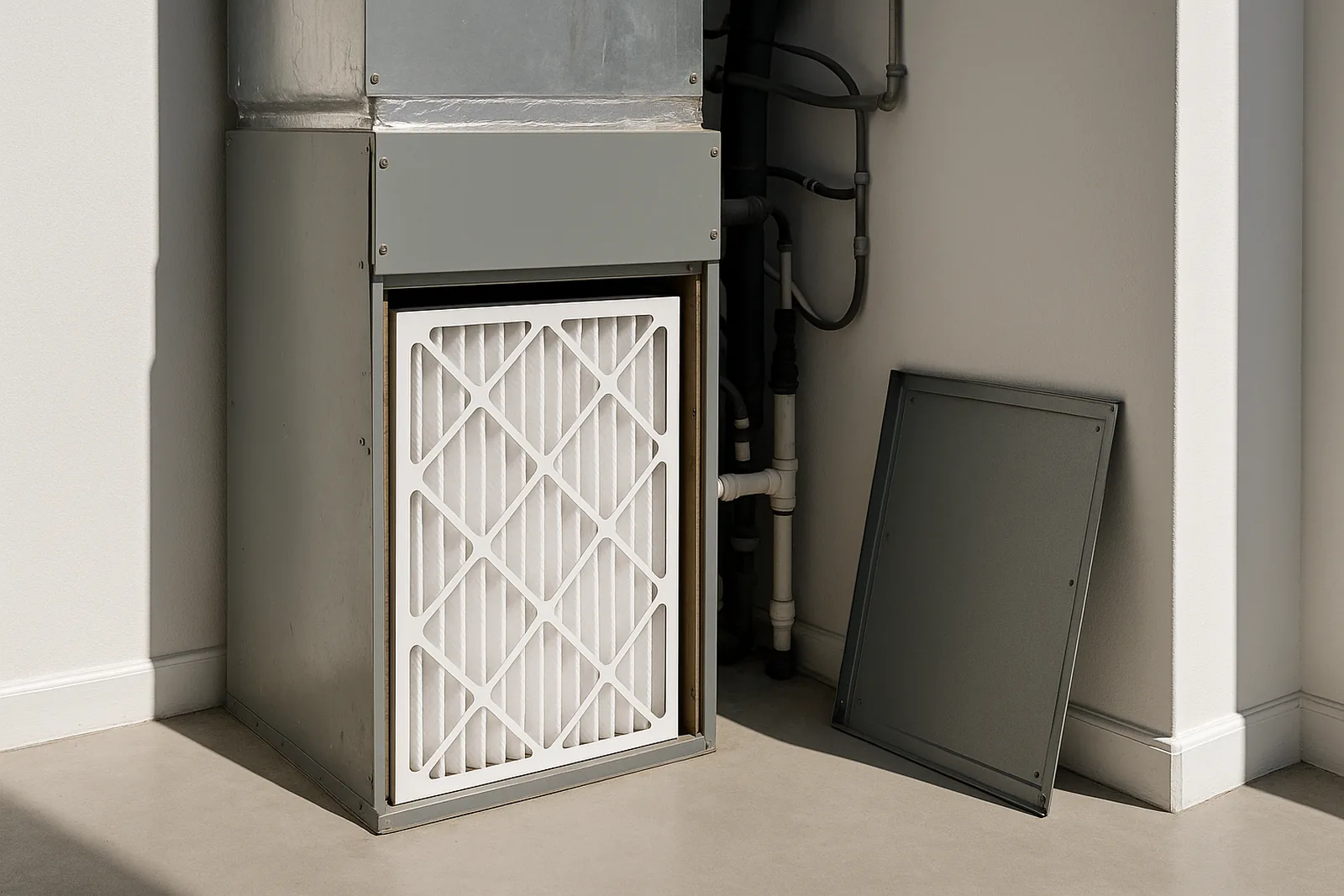
Use vinegar rather than bleach as your routine treatment. Bleach is hard on metal drain pans, on the coil above them and on the plants where the line discharges. Change your filter on schedule while you are at it, since the debris that feeds a clog arrives through the return. These are the same seasonal habits set out on the ENERGY STAR maintenance checklist for home cooling equipment.
When a Drain Line Clog Needs an HVAC Technician Instead
Call someone when the pattern repeats. A line that blocks again within days of being cleared usually has a physical cause behind it, such as a sagging run with no fall, a missing or dry trap, or a section of pipe that was never sized right. Those need correcting rather than flushing.
The same goes for a float switch that keeps tripping after a clean flush, a rusted secondary pan, visible growth on the evaporator coil itself, which is a coil cleaning job rather than a drain job, and a condensate pump that has stopped. If you cannot find the cleanout, or the air handler is somewhere you should not be climbing, that is a call too.
Book an AC Drain Line Flush With Admiral Heating and Cooling of Naples
A drain line clear and a condensate check are part of every maintenance visit our crews run, and they are the cheapest insurance in this climate. Admiral Heating and Cooling of Naples is family run, licensed and insured under Florida certified air conditioning contractor license CAC1817624, and someone answers the phone 24 hours a day at (239) 200-1834. If your system has already shut itself down and there is water in the pan, see what a full visit covers on our AC maintenance in Naples FL page.
Find the Cleanout and the Termination on Your Own AC Drain Line
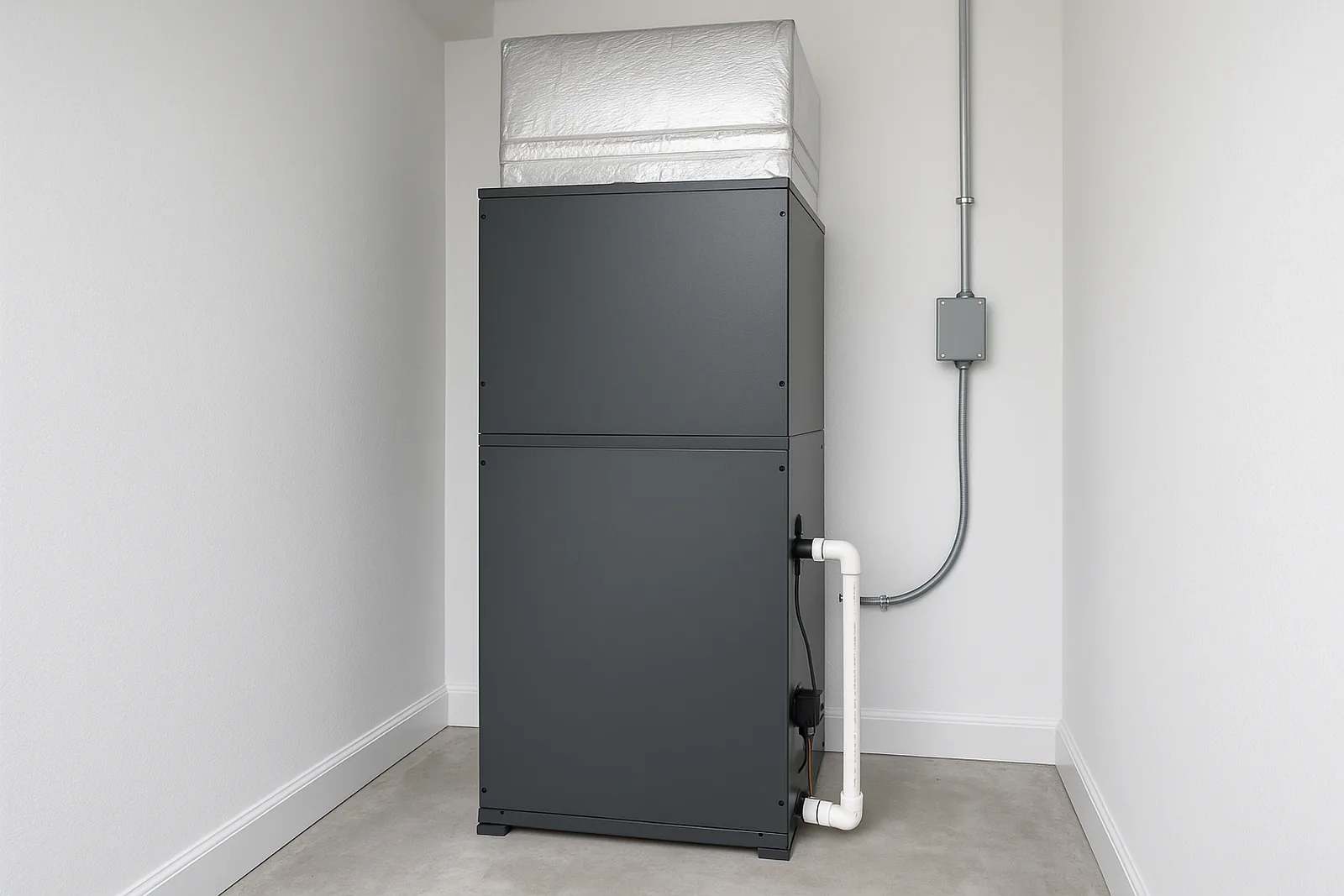
Ten minutes of looking now saves an emergency call later. Follow the white PVC pipe where it leaves the air handler and you will usually find a tee with a cap on it within a foot or two. That is the cleanout. Then walk outside and find where the line ends, normally at a wall near the unit or in a flower bed. Knowing both ends means you can check flow in seconds rather than guessing.
- The cleanout is a capped tee within a foot or two of the air handler.
- The secondary line usually ends high on a wall where a drip is obvious.
- Photograph both ends now so anyone checking the house can find them.
A Frozen Evaporator Coil Looks Like a Clogged AC Drain Line
Water on the floor by the air handler has two common causes and they need opposite responses. A blocked drain backs water up in the pan. A frozen evaporator coil makes far more water than the pan was built for, then dumps it all at once when the ice melts. Restricted airflow from a loaded filter or a closed return is the usual reason a coil freezes, so check the filter before you assume the drain is at fault.
- Ice or frost on the refrigerant line at the air handler points at a frozen coil.
- Switch the system to fan only and let the ice melt before anyone opens anything.
- A clogged drain trips the float switch. A frozen coil usually does not.
Condensate Drain Work Inside Naples Air Handlers
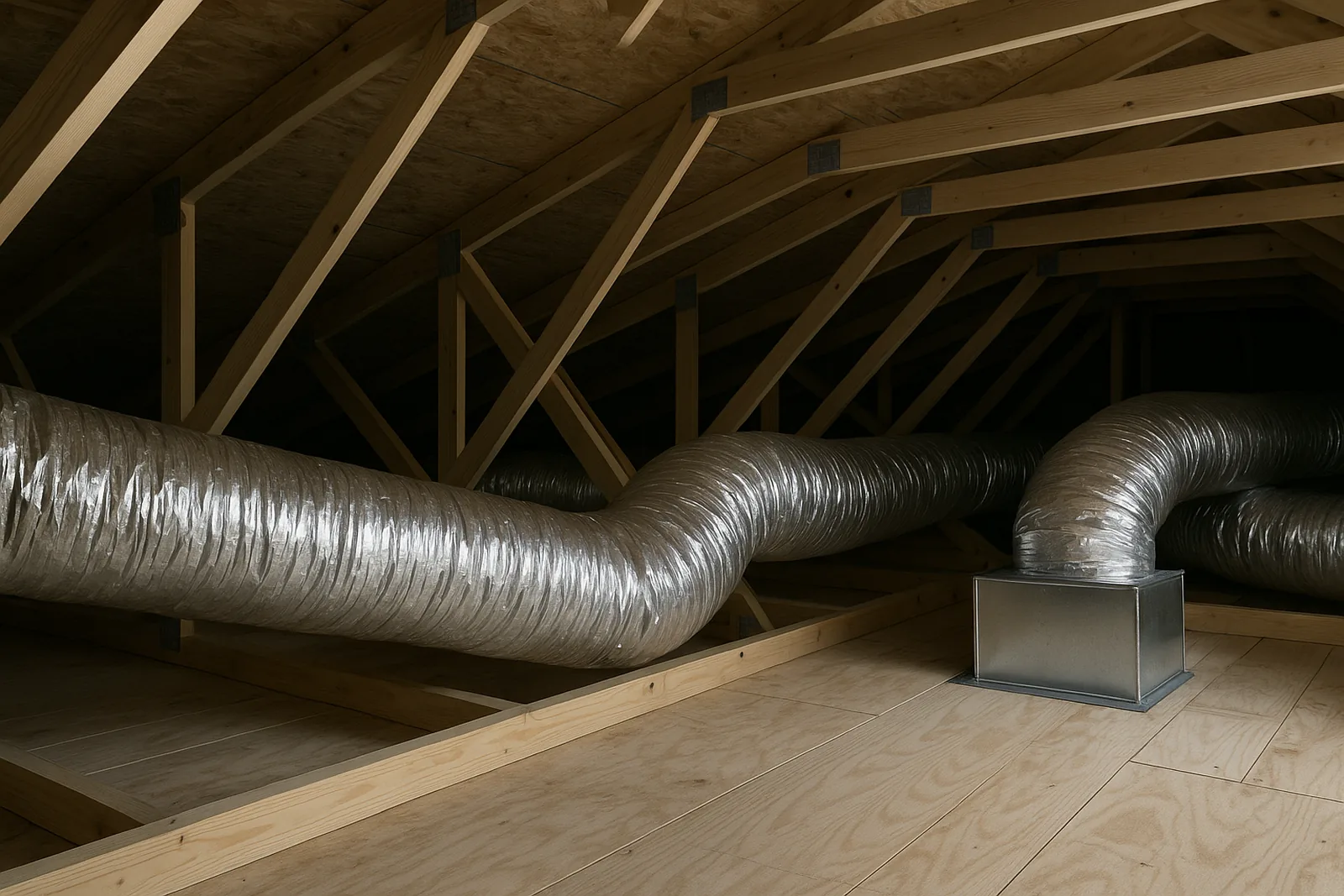
Condensate Drain Numbers for a Naples AC System
Common AC Drain Line Questions From Naples Homeowners
Why did my AC shut off when the thermostat is still calling for cooling?
A tripped float safety switch is the usual answer in Southwest Florida. When a clogged drain backs water up into the pan, the float lifts, breaks the low voltage control circuit and stops the system so the pan cannot overflow into your ceiling. Nothing has failed. Clear the blockage, the water level drops and the switch resets itself. Do not bypass or jumper the switch to get cooling back, because it is the only thing preventing water damage.
Can I pour bleach down my AC drain line?
We would not use it as a routine treatment. Bleach is hard on metal drain pans, on the evaporator coil sitting above them and on whatever is planted where the line discharges. Distilled white vinegar does the job on algae and biofilm without that collateral damage. Pour about a cup into the cleanout with the system off, leave it half an hour, then confirm water is running freely from the outdoor termination.
How often should an AC drain line be flushed in Naples?
Monthly through the cooling season from around May to October, and quarterly for the rest of the year, is a realistic schedule for most homes here. Humidity never really lets up in Southwest Florida, so the biofilm that causes the blockage keeps rebuilding. A drain clear is also part of every maintenance visit our technicians run, which covers you between homeowner flushes.