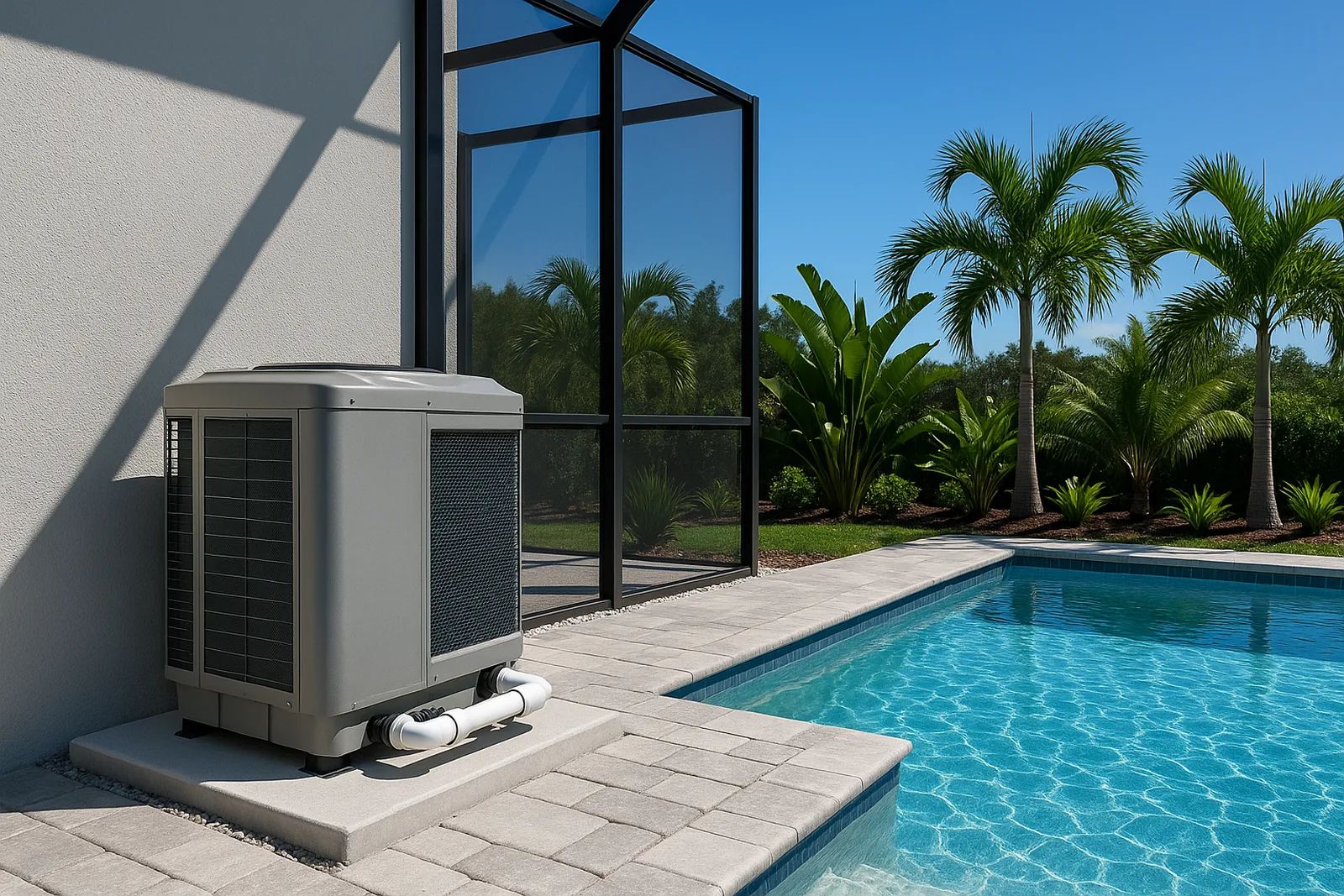
Choose Between a Pool Heat Pump and a Gas Pool Heater for Your Naples Pool
Two machines can warm a Naples pool and they behave nothing alike. A gas heater burns fuel and produces heat on demand. A pool heat pump moves heat out of the outdoor air using a refrigerant cycle, which makes it far cheaper to run and far slower to act. Admiral Heating and Cooling of Naples services pool heat pumps every week, so this comparison is written from the repair side rather than the showroom side. It covers what each one costs to operate, how fast each one heats, where a heat pump loses ground on a cold night, how long each tends to last, and which one suits the way you actually use your pool.
How a Pool Heat Pump and a Gas Pool Heater Actually Make Heat
The two machines solve the same problem in completely different ways, and every practical difference between them comes from that.
A gas pool heater burns propane or natural gas in a combustion chamber and passes pool water through a heat exchanger sitting in the flame path. It makes heat. Its output is set by the burner, so it does the same thing at two in the morning in January as it does at noon in July.
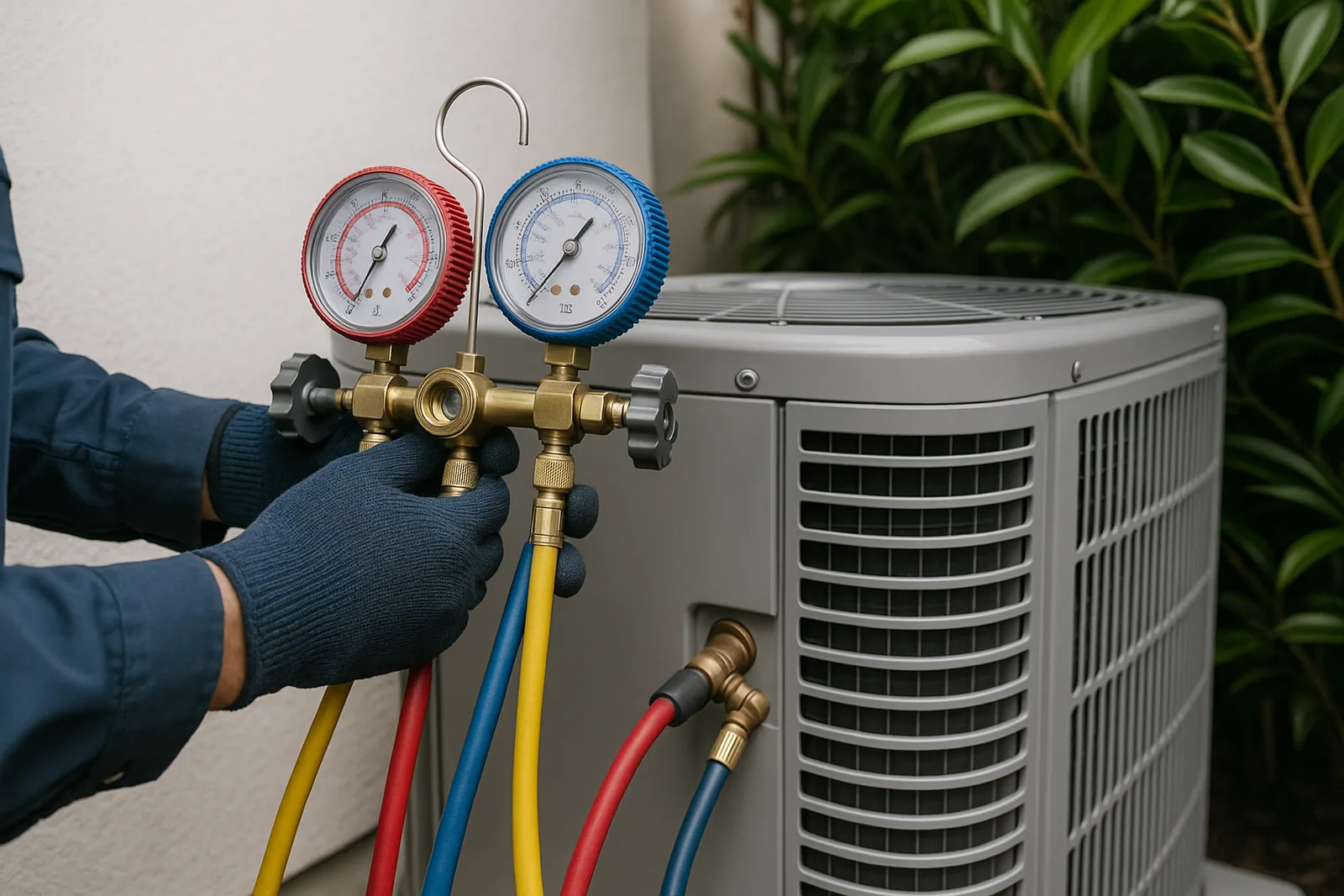
A pool heat pump makes no heat at all. It runs a refrigerant cycle, pulls warmth out of the outdoor air with a large evaporator coil and a fan, and moves that warmth into the water through a heat exchanger. It is the same technology as the air conditioner on the side of your house running in reverse, which is why a pool heat pump is refrigerant work and belongs with a licensed HVAC contractor rather than a pool cleaning route. Refrigerant is regulated and has to be recovered rather than vented, and the EPA on refrigerant safety covers how modern refrigerants must be handled and why the person opening that circuit needs certification.
Operating Cost Is Where the Pool Heat Pump Pulls Ahead
Combustion has a ceiling. A gas heater can never deliver more energy to the water than the fuel contains, and real world efficiency lands somewhere below that ceiling once flue losses are counted.
A heat pump is not making energy, it is moving it, so it can deliver several units of heat to the water for every unit of electricity it draws. That is why the running cost gap is not a small margin, it is a different order of magnitude, and it is the single strongest argument for a heat pump on a pool that gets used regularly.
Fuel supply makes the gap wider in Collier County. Much of the Naples area has no natural gas at the street, so a gas pool heater runs on propane delivered by truck and stored in a tank on your property. Delivered propane is the most expensive way to buy pool heat, and the tank itself needs space, permitting and refilling. Check what fuel is actually available at your address before you price anything, because a quote built around natural gas is meaningless if there is no gas line.
Heating Speed Belongs to the Gas Pool Heater
If you want the pool warm tonight, gas wins and it is not close. A properly sized gas heater lifts a residential pool several degrees in a few hours, so you can leave it off, decide on Friday that the family is swimming Saturday, and be ready.
A heat pump works slowly and steadily. A meaningful temperature lift on a full sized pool is measured in a day or more, not in an afternoon, and the machine is designed to hold a temperature rather than sprint to one. That difference decides how you own it. A heat pump wants to run on a schedule with a cover on the pool overnight, because an uncovered pool loses most of its heat from the surface and a heat pump cannot outrun that loss cheaply. A gas heater tolerates being an on demand appliance because it can recover fast.
Ambient Temperature Limits on a Pool Heat Pump in Winter
This is the honest limitation and the one that gets glossed over in showrooms. A heat pump harvests heat from outdoor air, so as the air cools its capacity falls. Output drops off noticeably as temperatures head down through the fifties, and most units carry a low ambient cutout below which they will not run at all to protect the compressor and to avoid icing the evaporator coil.
Naples spends most of the year comfortably inside a pool heat pump's working range, which is exactly why the technology suits this market. The exception is the handful of cold snaps in December through February when overnight air drops into the forties and fifties. Those are precisely the nights a cold pool is most obvious. A gas heater does not care what the air is doing. If you swim through cold fronts, that is the case for gas, or for gas alongside a heat pump.
Lifespan and Maintenance on Both Kinds of Pool Heater
Trade experience rather than a laboratory figure, so treat these as ranges. Pool heat pumps commonly give around a decade of service in coastal Southwest Florida, and gas heaters commonly give less, because combustion plus pool chemistry is hard on a heat exchanger. Salt air shortens both, the same way it shortens the life of an air conditioning condenser sitting a couple of miles from the Gulf.
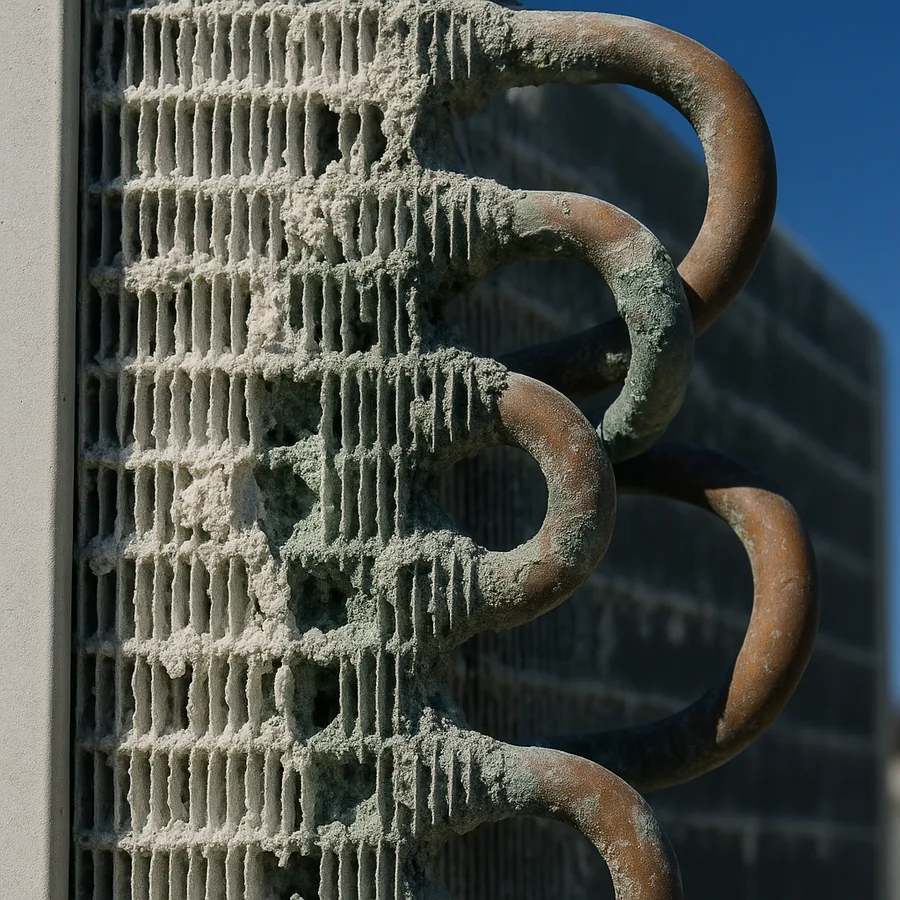
Water chemistry kills more pool heaters than anything else. Low pH water is acidic and eats heat exchangers from the inside on both machines, so balanced water is heater maintenance, not just swimmer comfort. On the heat pump side the other job is airflow. The evaporator coil is a big finned surface facing the yard, and hedges grown in tight against it, mulch, grass clippings and salt deposits all choke it. Keep three feet clear, rinse the coil with fresh water, and keep the condensate path underneath it open, since a heat pump that appears to be leaking is usually just producing condensate exactly as designed. The seasonal habits are the same ones on the ENERGY STAR maintenance checklist for the cooling equipment on your house.
Which Suits Naples Pools and Which One Sits Idle
Match the machine to how you actually swim.
If you live here year round and use the pool most weeks, a heat pump is almost always the right call. It holds a temperature cheaply, the climate keeps it inside its working range nearly all year, and a cover turns it from good to excellent.
If the house is seasonal, a rental, or somewhere you arrive at with two days notice and want the pool hot on arrival, a gas heater earns its running cost through speed. The same is true if you have an attached spa, because nobody waits a day for a spa.
Plenty of Naples homes end up with both. A heat pump holds the pool at a base temperature through the season and a gas heater boosts the spa or covers the cold snaps. Before you commit either way, check two practical things. A heat pump needs a dedicated electrical circuit and enough service capacity at the panel, and it needs open air around it. A gas heater needs a fuel source, clearances and a tank location you can live with. Our own crews work the heat pump side of this, which is licensed refrigerant work, and we will tell you plainly when a repair is worth doing and when it is not.
Talk to Admiral Heating and Cooling of Naples About Your Pool Heat Pump
Admiral Heating and Cooling of Naples services pool heat pumps across Naples, Marco Island, Bonita Springs, Estero, Golden Gate and Port of the Islands. We are family run, licensed and insured under Florida certified air conditioning contractor license CAC1817624, and the phone is answered 24 hours a day at (239) 200-1834. If your pool heat pump is running and the water is not warming, that is a diagnosis worth having before anyone sells you a replacement.
Sizing a Pool Heat Pump for a Naples Pool and Its Screen Enclosure
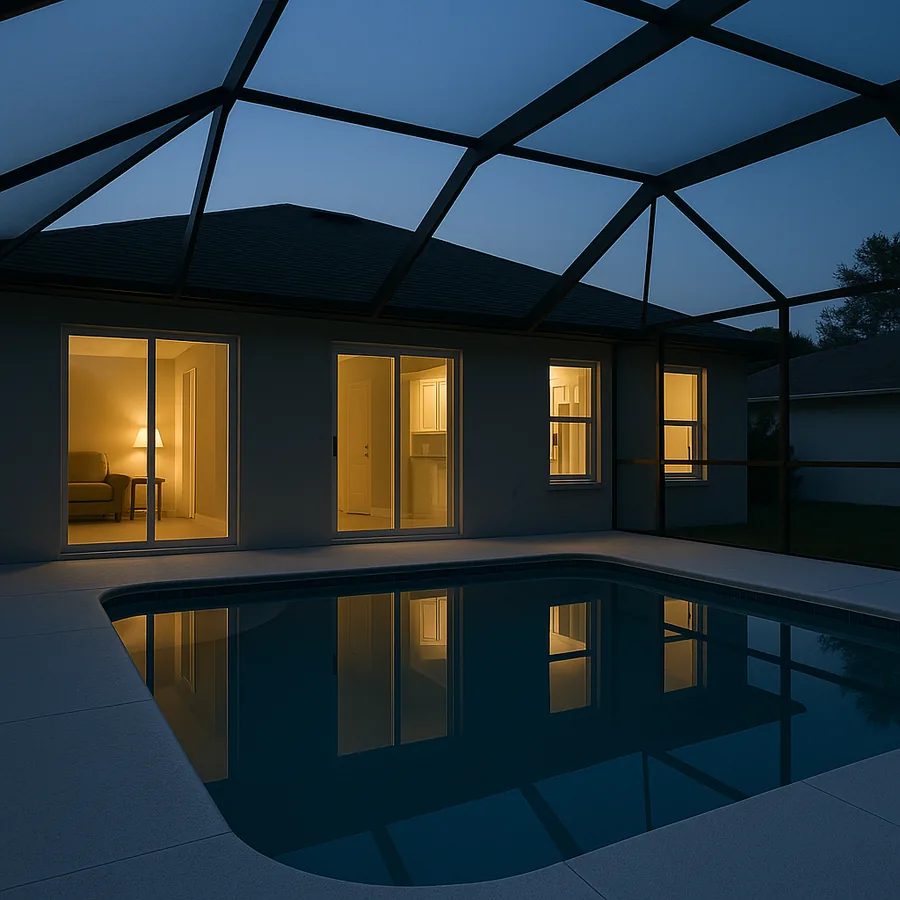
Output on a pool heat pump is published at a test condition, so the number on the box is not what your pool will see on a cool February morning. Sizing works off the surface area of the water, how exposed the pool is to wind, whether a cage and a cover are in play, and the temperature you actually want to hold. An undersized machine runs constantly and never quite arrives. Ask how the size on your quote was reached.
- Surface area matters more than gallons because heat leaves through the top.
- A screen cage cuts wind and a cover cuts the overnight loss that follows it.
- Rated output is quoted at a test condition and falls as the outdoor air cools.
What a Pool Heat Pump Does Before It Stops Heating the Water
A heat pump rarely fails without warning. Water that takes longer to reach temperature each week, frost on the evaporator coil on a cool morning, a fan that cycles on and off in short bursts, and a puddle underneath are all worth a call. That last one usually is not a leak at all. A working heat pump condenses water out of the air the same way a cold glass does, and the drip is the machine doing its job.
- Longer heat up times week over week point at charge or airflow.
- Ice on the evaporator coil on a cool morning is a real fault worth reporting.
- Water pooling under the cabinet is usually condensate rather than a leak.
Pool Heat Pump Service Around Naples and Marco Island
Pool Heat Pump Numbers for Naples Pool Owners
Pool Heat Pump Questions We Answer on Naples Service Calls
Will a pool heat pump keep my Naples pool warm in January?
Most of the time, yes. Southwest Florida stays inside a pool heat pump's working range for the large majority of the year. The exception is a cold front, because a heat pump pulls its heat from outdoor air and loses capacity as that air cools, with a cutout below which it will not run. A cover makes a real difference on those nights. If you swim through every cold snap, a gas heater or a gas assist alongside the heat pump is the honest answer.
Is a pool heat pump cheaper to run than a gas pool heater?
Yes, and by a wide margin rather than a small one, because a heat pump moves existing heat instead of creating it while a gas heater is limited by what the fuel contains. The gap is wider again around Naples, where many addresses have no natural gas at the street and a gas heater runs on delivered propane. Speed is what you trade away, since a heat pump holds a temperature well and raises one slowly.
Do you service pool heat pumps in Naples?
Yes. Pool heat pumps are refrigerant equipment, so they are HVAC work rather than pool service work, and our technicians handle them alongside home and commercial systems across Naples, Marco Island, Bonita Springs, Estero, Golden Gate and Port of the Islands. Call (239) 200-1834 and we will diagnose what is wrong before anyone talks about replacing it.