Why Salt Air Shortens the Life of a Naples AC Condenser
Every coastal town has a version of this conversation. A homeowner in Naples replaces a condenser at nine or ten years old and cannot work out why the identical unit at a relative's house up in Ocala is still running at fifteen. The equipment did not give up early because it was cheap. It gave up early because of where it sat. Salt carried in off the Gulf settles on an outdoor coil day after day, and the metal underneath it corrodes long before the compressor wears out. This guide from Admiral Heating and Cooling of Naples covers what salt actually does to air conditioning equipment and what genuinely helps.
What Salt Air Actually Does to an AC Condenser Coil
Sea spray does not stay at the beach. Wind picks microscopic salt droplets off the Gulf and carries them inland, where they settle on every outdoor surface, including the coil wrapped around your condenser. That coil is the part of your air conditioning system that dumps heat from inside the house into the outside air, and it is built from thin aluminum fins bonded to copper tubing.
Salt is hygroscopic, which is a technical way of saying it pulls water out of the air and holds onto it. In Southwest Florida there is plenty of water in the air to pull. So instead of a dry dusting on the metal you get a damp salty film that sits there overnight, dries partway in the afternoon and re-wets when the humidity climbs again. Damp salt bridging two dissimilar metals is a small battery, and aluminum is the side that loses.
Coastal Condenser Corrosion Starts at the Fins and Works Inward
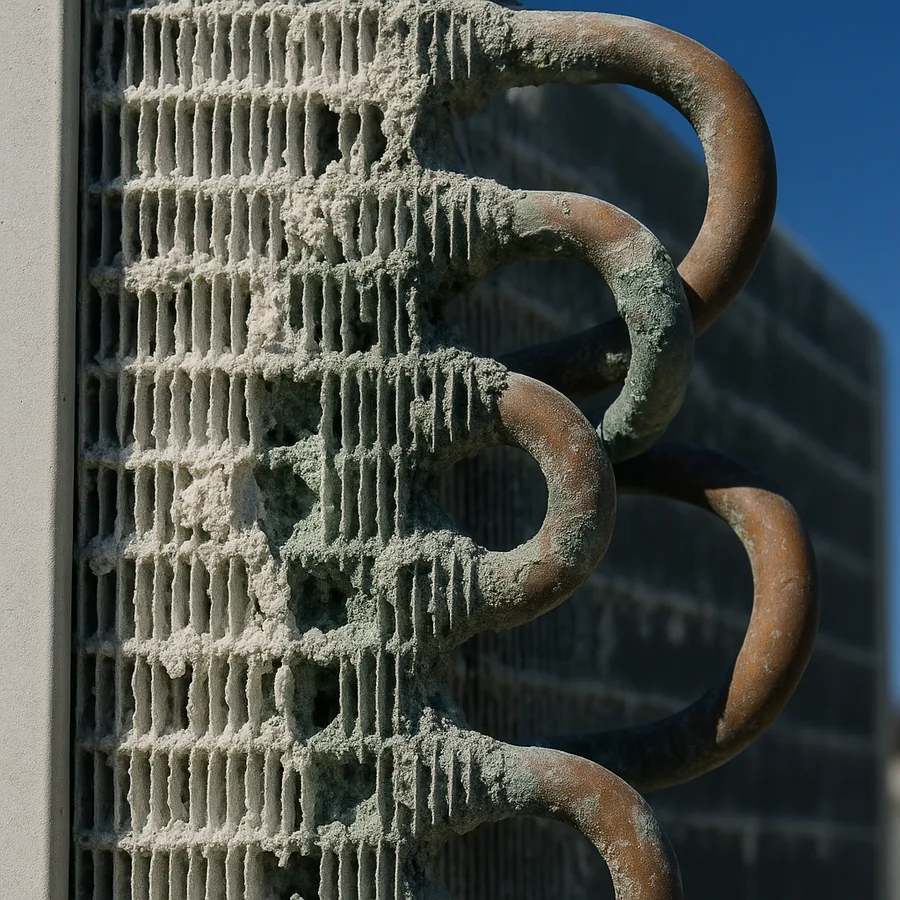
The fin surface goes first. You will see a chalky white or grey powder down in among the fins, then fins that crumble when you brush them with a finger. That layer is not cosmetic. Corrosion product acts as insulation on a part whose entire job is shedding heat, and it blocks the gaps the fan is trying to pull air through. The system answers by running longer and at higher head pressure, which loads the compressor.
From there it moves into the joint where fin meets copper tube, and eventually into the copper itself. Formicary corrosion, sometimes called ant nest corrosion for the tunnel pattern it leaves, opens pinholes far too small to see. What you notice is a system that cools a little worse each season and a refrigerant charge that keeps going low. Topping up refrigerant on a leaking coastal coil is money spent on a problem that only grows. If a technician has added refrigerant twice, ask for a leak search instead of a third top up.
Why a Naples HVAC System Two Miles From the Gulf Ages Faster
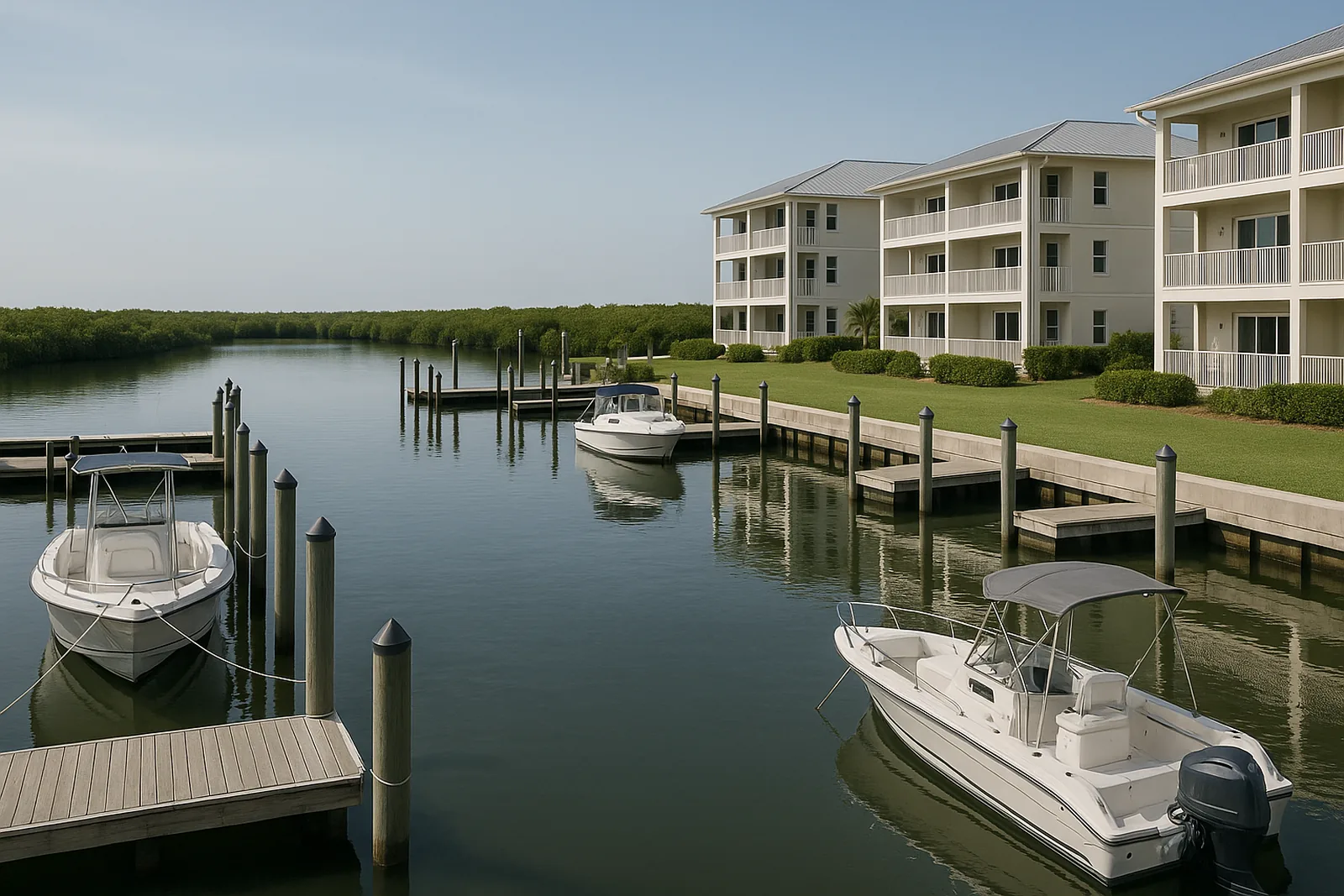
Salt deposition falls off sharply with distance from open water, but it does not stop at the last waterfront street. Sea breezes push salt aerosol well inland through the afternoon, so a home a couple of miles back still takes a real dose, just less than a house on Marco Island or out at Port of the Islands with water on two sides.
Local conditions matter as much as the map. A condenser tucked on the leeward side of a house behind a wall sees less salt than the identical unit sitting in an open side yard facing the water. Units under a screened lanai roof stay drier. Units downwind of a pool deck collect chlorine on top of the salt. That is how two neighbors buy the same equipment in the same year and get very different service lives out of it.
An 8 to 12 Year Lifespan Is Realistic for Coastal Air Conditioning
Manufacturers generally talk about fifteen to twenty years for a residential system. That number assumes a climate with a real off season. Here the equipment runs most of the year, and the coil is corroding the whole time it runs. Across coastal Southwest Florida the working expectation in our trade is closer to eight to twelve years before a condenser needs replacing, and the closer a unit sits to salt water the further down that range it tends to land.
None of that is a reason to replace anything early. It is a reason to know where your system sits in its life so the day is not a surprise. If yours is past ten and repairs are getting closer together, read ENERGY STAR guidance on when to replace for the signs a system is past repairing, then walk the numbers with a licensed technician. Our guide on whether to repair or replace your AC works through that decision in detail.
A Rinse Schedule That Buys Back Years of Condenser Life
Rinsing is the highest value thing a homeowner can do for a coastal condenser, and it costs nothing but ten minutes. Fresh water dissolves the salt film and carries it away before it has time to work on the metal.
- Kill power at the outdoor disconnect box beside the unit before you touch anything.
- Use a regular garden hose at normal pressure. A pressure washer folds aluminum fins flat and does more harm than the salt.
- Spray from the top down and, where you can reach it, from the inside of the coil outward so debris leaves the way it came in.
- Skip household detergents and degreasers. Plain water is what you want, or a cleaner your technician recommends for aluminum.
- Rinse about monthly through the year and always after a storm has driven spray inland.
That rhythm will not make a coastal unit immortal. It reliably buys years on the back end, and it holds the system near the efficiency you paid for in the meantime.
What Professional Coil Cleaning Does That a Rinse Schedule Cannot
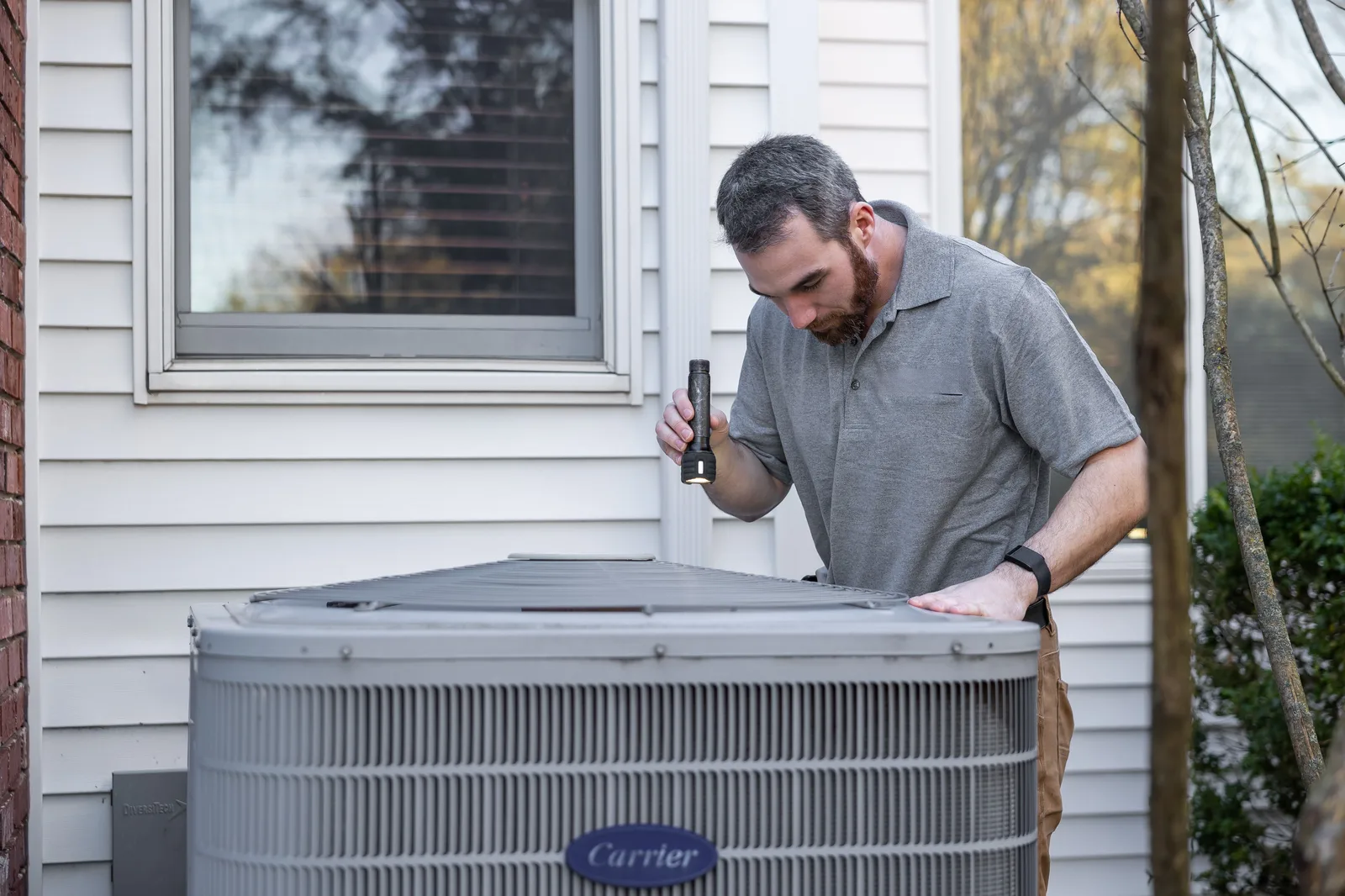
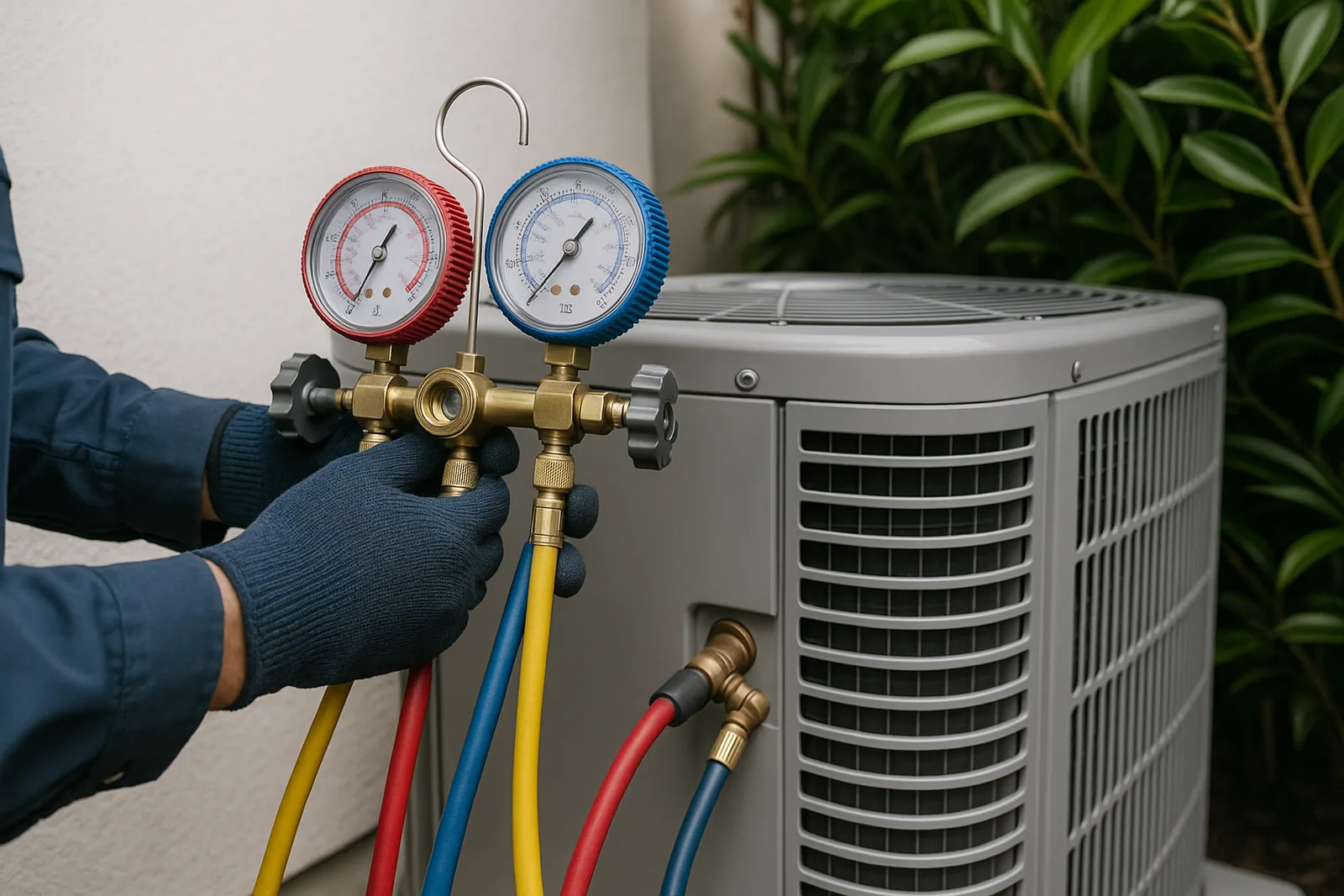
A hose reaches the outside of the coil. It does not reach the inside face where the dirt that actually chokes airflow collects, and it does nothing about the mechanical side. On a maintenance visit our technicians pull the top panel and fan assembly, clean the coil from the inside out with a pH neutral cleaner made for aluminum, comb bent fins back open, and inspect tube joints and the base pan for corrosion a rinse would never expose.
The rest of the visit is measurement. Superheat and subcooling say whether the charge is right. Amp draw on the compressor and the fan motor shows whether either is straining. Contactor points, capacitor values and the condensate side all get checked while the panels are off. The ENERGY STAR maintenance checklist sets out the seasonal tasks a cooling system needs and it is a fair standard to hold any company to. What we cover is listed on our AC maintenance in Naples page.
Corrosion Resistant Coils and Coastal Coatings Worth Paying For
If you are already replacing equipment, the coastal decision happens at purchase and not afterward. Most manufacturers offer a coastal or seacoast version of their outdoor units. What you are buying is some combination of an epoxy coated or e-coated coil, a coated cabinet, stainless or coated hardware, and in some lines an all aluminum coil that removes the dissimilar metal problem at the source.
There is a premium for it. On a home within a few miles of the Gulf it is usually the easiest line in the whole quote to justify, because it targets the exact failure that ends most condensers here. Ask your contractor to put the coil type and any coating in writing on the proposal rather than leaving it as a verbal assurance. Mounting matters too. A pad that keeps the unit up out of standing water and out of sprinkler spray removes two more corrosion sources for the price of a little planning.
Talk to Our Naples HVAC Technicians About Your Condenser
Admiral Heating and Cooling of Naples is family run, licensed and insured, holding Florida certified air conditioning contractor license CAC1817624, with over 120 years of combined experience across our crews. We work on all makes and models, including Carrier, Bryant, Lennox, York, American Standard, Amana and Goodman. If you want someone to tell you honestly how your coil is holding up, see the air conditioning services we provide or get in touch. The phone is answered 24 hours a day at (239) 200-1834.
Salt Air Reaches the Indoor Air Handler and the Electrical Side Too
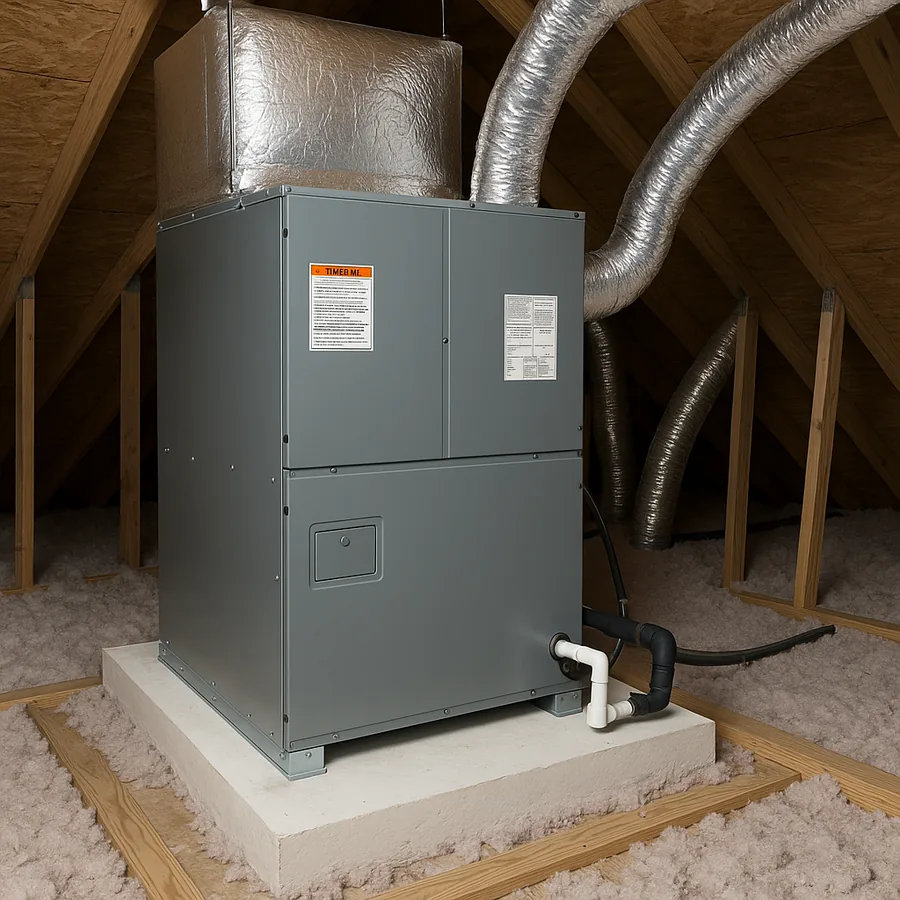
Most of the attention goes to the outdoor coil because that is where corrosion is visible. Salt laden air does not stop there. It travels down the line set into a garage or attic air handler, settles on contactor points and disconnect terminals, and works on the fasteners holding cabinet panels shut. A crumbling screw head or a pitted contactor is the same chemistry as a chalky fin, just somewhere nobody looks until the system stops.
- Contactor points and capacitor terminals pit and arc long before the compressor complains.
- Cabinet screws and panel edges rust so the box is harder to open on a service call.
- Line set insulation splits in the sun and lets damp salty air onto bare copper.
Where a Condenser Sits Decides How Much Salt It Collects
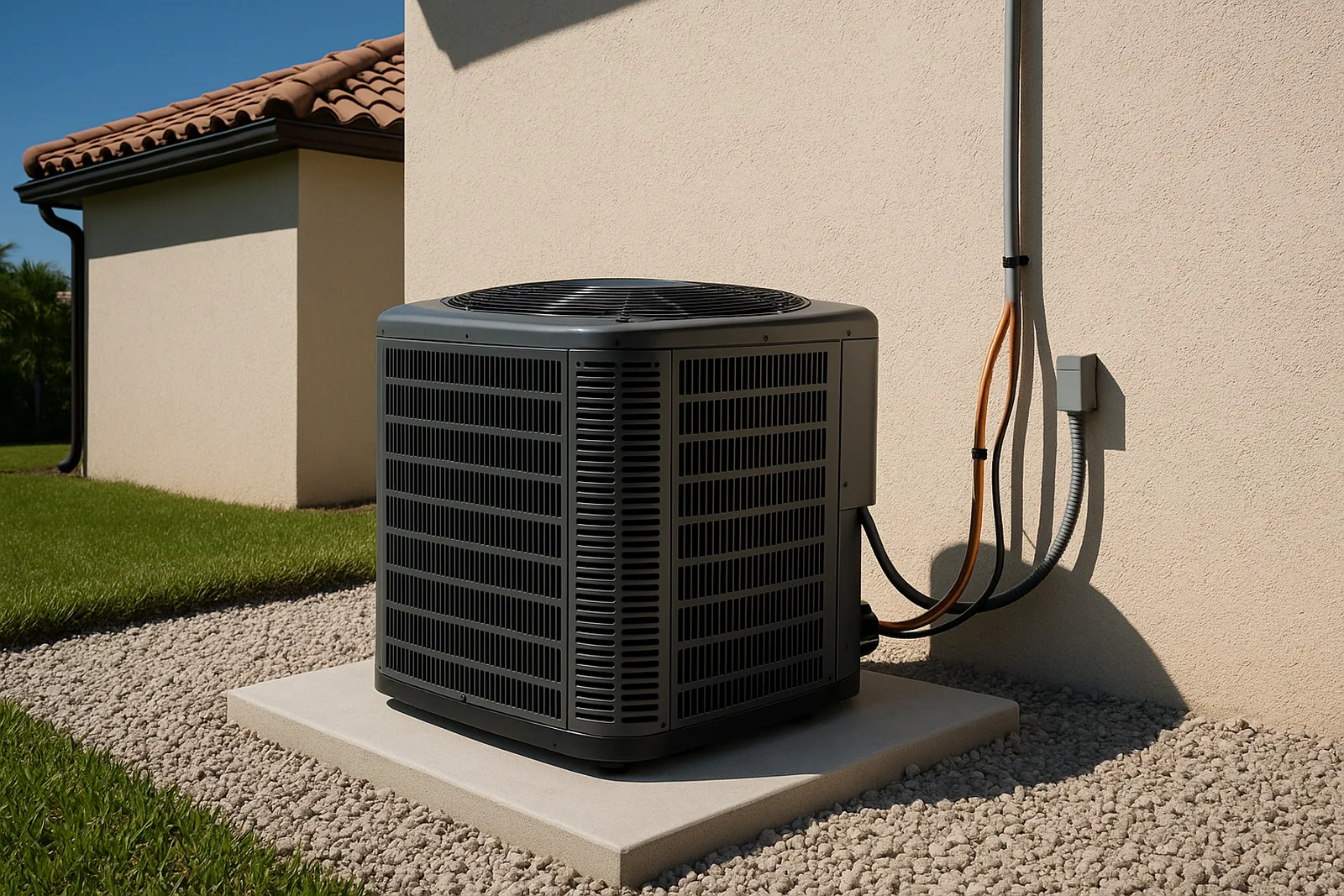
Two identical condensers on the same street can reach the end of their working lives years apart, and the difference is usually where they were set. A pad that keeps the cabinet clear of standing water, a position out of the irrigation arc, and open space on every side all cut the amount of salt and moisture that stays on the coil. It costs nothing at install time and it is worth revisiting on equipment placed by whoever got there first.
- Keep the pad high enough that the cabinet never sits in standing water.
- Move sprinkler heads so the coil is not soaked with hard water every morning.
- Leave clear air on all four sides rather than boxing the unit into a hedge.
Coastal AC Condenser Work Around Naples
Coastal AC Condenser Numbers for Naples Homeowners
Salt Air and AC Corrosion Questions Naples Homeowners Ask
How often should I rinse my condenser in Naples?
About once a month through the year is a reasonable rhythm for a coastal home, and always after a storm has driven spray inland. Cut the power at the outdoor disconnect first and use a garden hose at normal pressure, never a pressure washer.
Can a corroded AC coil be repaired instead of replaced?
Sometimes a single leak can be brazed, but once fins are crumbling and the corrosion has reached the tube joints, a repair tends to buy one season. At that point our technicians will tell you honestly whether a coil or a full condenser replacement is the better spend.
Are corrosion resistant coils worth the extra cost near the Gulf?
On a home within a few miles of salt water they usually are, because they target the exact failure that ends most condensers in Southwest Florida. Ask for the coil type and any coating to be written into the proposal rather than promised verbally.