Your Hurricane Season AC Checklist for a Southwest Florida Home
Storm season in Southwest Florida runs from June through November and an outdoor air conditioning condenser sits through all of it. Most of the work that gets a system through a hurricane in good shape happens on ordinary days rather than in the last hour before landfall. This checklist from Admiral Heating and Cooling of Naples covers what to do with your AC before a storm arrives, what to leave alone while the power is out, and how to inspect the equipment once conditions are safe. None of it is complicated. Doing it in order is usually what gets a system running again quickly once the power returns.
Before the Storm Steps for Your Southwest Florida AC System
Most of the work happens well before a name is on the map. Early in the season, cut vegetation back at least two feet on every side of the condenser and clear anything stored against it. Check that the unit is properly anchored to its pad, since Florida code has required hurricane tie downs on outdoor equipment for years and older installations sometimes predate that or have corroded straps.
Then document it. Photograph the unit from four sides, photograph the data plate with the model and serial legible, and note any damage that already exists. That five minute record is what settles an insurance conversation later. Save it somewhere that is not only on your phone. It is also worth working through the Florida Division of Emergency Management and the state's own preparation checklist for the rest of the house while you are out there.
Shut Off at the Breaker to Protect the Condenser and Air Handler
As a storm arrives, the grid gets ugly before it goes down. Voltage sags, comes back, sags again. A compressor trying to start on low voltage draws enormous current and that is where the damage happens, not in the wind. The same thing happens in reverse when power is restored across a neighborhood all at once.
So set the thermostat to off first, then switch off the breaker for the air handler and the breaker or outdoor disconnect for the condenser. Do it before conditions get bad enough that you would rather not be outside. Leave it off until power has been steady for a while and you have looked the equipment over. Running the house a few degrees cooler than usual in the hours beforehand gives you thermal coasting room, and a well sealed home holds it longer than most people expect. Working backward from the National Hurricane Center's preparedness guidance gives you the official storm preparation timeline to schedule the rest of the day around.
Clear Debris and Document the AC Condenser Before a Hurricane
Loose objects are what actually break condensers. Patio furniture, planters, grill covers, screen panels and lawn equipment all become projectiles, and a coil takes a direct hit badly. Walk the yard and put everything solid inside.
Covering the unit is more nuanced than it sounds. A cover on a system that might still run traps heat and moisture and does more harm than good. If the system is already off at the breaker and you want to shield the top from falling debris, a piece of plywood weighted or strapped across the top is the usual approach, and it comes off as soon as the wind drops. Do not wrap the sides. A wrapped cabinet holds water against the metal, which is the last thing a coastal coil needs.
After the Storm Inspection Steps for a Naples AC Condenser
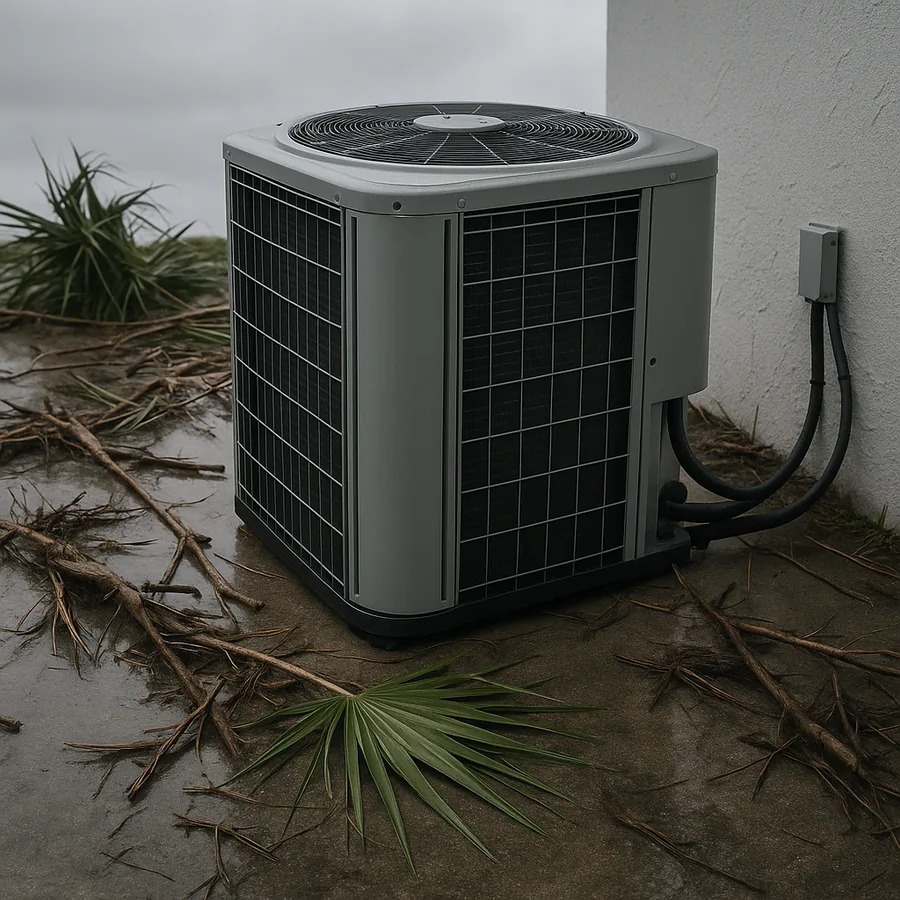
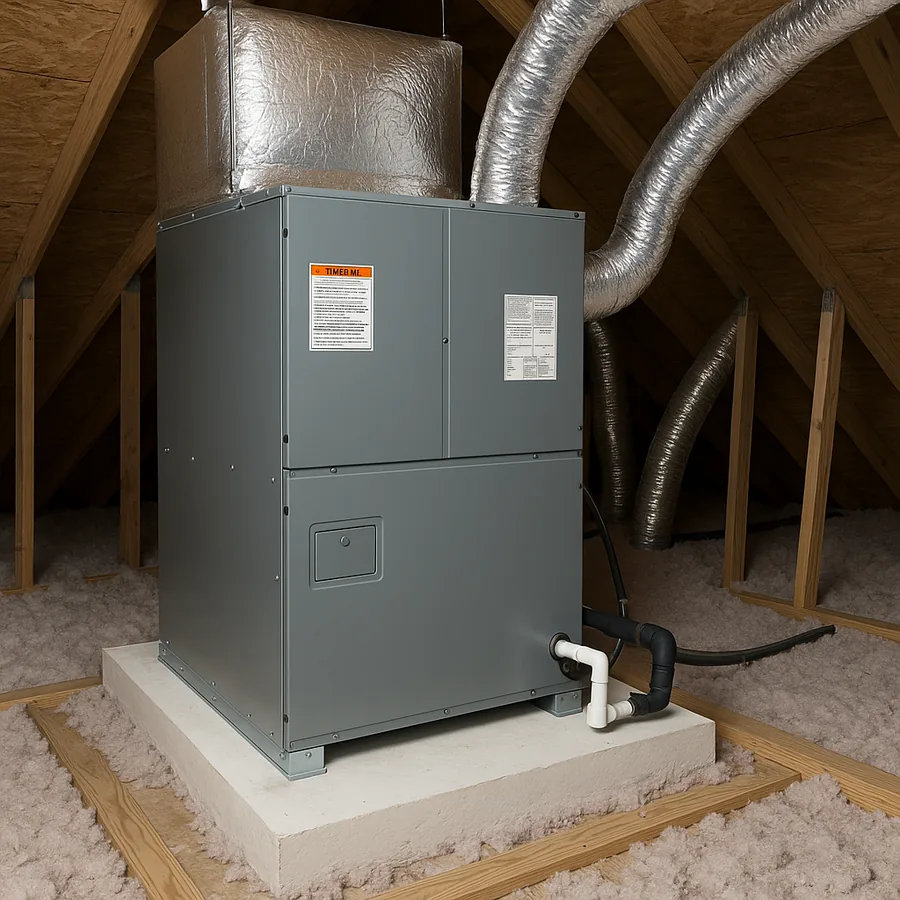
Wait for the all clear, then look before you touch a breaker. Walk around the condenser and check for a water line or mud line on the cabinet, which tells you how high water got. Look for debris packed into the coil, fins flattened on one side, a pad that has shifted, refrigerant line set that has been pulled or kinked, and any damage to the electrical whip or disconnect box.
Look up as well. A downed service line touching anything metal makes the whole area unsafe, and that is a utility call rather than an HVAC call. Inside, check the air handler closet or garage platform for water intrusion and check the condensate drain, which often backs up after days without power. Ready.gov's hurricane guidance covers what to do before and after a storm in the broader safety sense and is worth reading alongside this.
Do Not Restart a Flooded Condenser After a Hurricane
This is the one item on the list with real consequences. If flood water reached the electrical components, the compressor terminals or the contactor, do not energize the unit. Water in those places turns a startup attempt into a short, and salt or brackish water leaves conductive residue behind long after the visible water has gone.
Silt is the other half of the problem. It settles into fan motor bearings, into the contactor, and onto control boards, and it does not rinse out. A flooded condenser needs to be opened, inspected and dried before anyone decides what is serviceable. Sometimes it is a cleanup and a couple of components. Sometimes the honest answer is that the unit is finished. Either way, photograph everything before work starts, because the insurance claim depends on that record.
Surge Damage to an Air Conditioning Compressor and Control Board
Surge damage usually announces itself the moment power returns. Common symptoms are a system that is completely dead, a blower that runs with no cooling, a fault code on the board, a bulged capacitor or a contactor welded shut. Some of these are inexpensive parts. A fried inverter board on a variable speed system is not.
Protection is cheap by comparison. A whole house surge protector at the electrical panel handles the large events, and a dedicated surge device at the condenser handles what gets past it. Neither is a guarantee and no one should sell it as one. Both cost a fraction of a control board and they work every day of the year, not just in September.
What to Inspect on Your HVAC System Once the Power Returns
Restart in order rather than all at once. Turn the breakers back on with the thermostat still off and leave it that way for a while, which lets the crankcase heater drive refrigerant back out of the compressor oil after a long outage. Then set the thermostat to cool a few degrees below room temperature and listen.
- Cool air should be coming from the registers within ten to fifteen minutes.
- Check that the outdoor fan is spinning freely and the coil is clear of leaves and debris.
- Rinse salt and storm spray off the outdoor coil with a garden hose once the unit is off again.
- Check that the condensate drain is flowing and the float switch has reset.
- Replace the filter if the house sat hot and humid for days.
If the system trips a breaker, hums without starting or blows warm air, stop there and call a technician rather than resetting it repeatedly.
Have Our Naples HVAC Technicians Check Your AC After a Storm
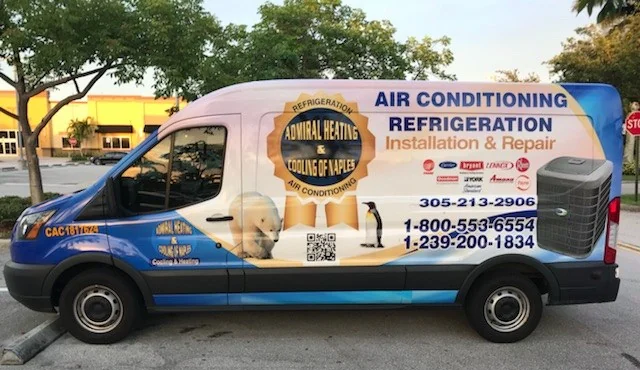
Admiral Heating and Cooling of Naples is family run, licensed and insured, holding Florida certified air conditioning contractor license CAC1817624. Our crews carry over 120 years of combined experience and we answer the phone 24 hours a day, seven days a week, which matters most in the week after a storm. See the air conditioning services we provide or get in touch at (239) 200-1834.
Running an Air Conditioner on a Generator After a Hurricane
This is the question we get most in the days after a storm. A portable generator that runs a refrigerator and some lights will usually not start a central condenser, because the compressor draws far more current in the first moment than it does while running. Sizing has to cover that starting surge, not the running load on the data plate. Have the generator and the transfer arrangement looked at by an electrician before you count on cooling from it.
- Starting current on a compressor is far higher than its running current.
- Backfeeding a house through an outlet is dangerous and is never the answer.
- A window unit cooling one room is often the realistic way to ride out an outage.
What Our Naples HVAC Crew Needs When You Call After a Storm
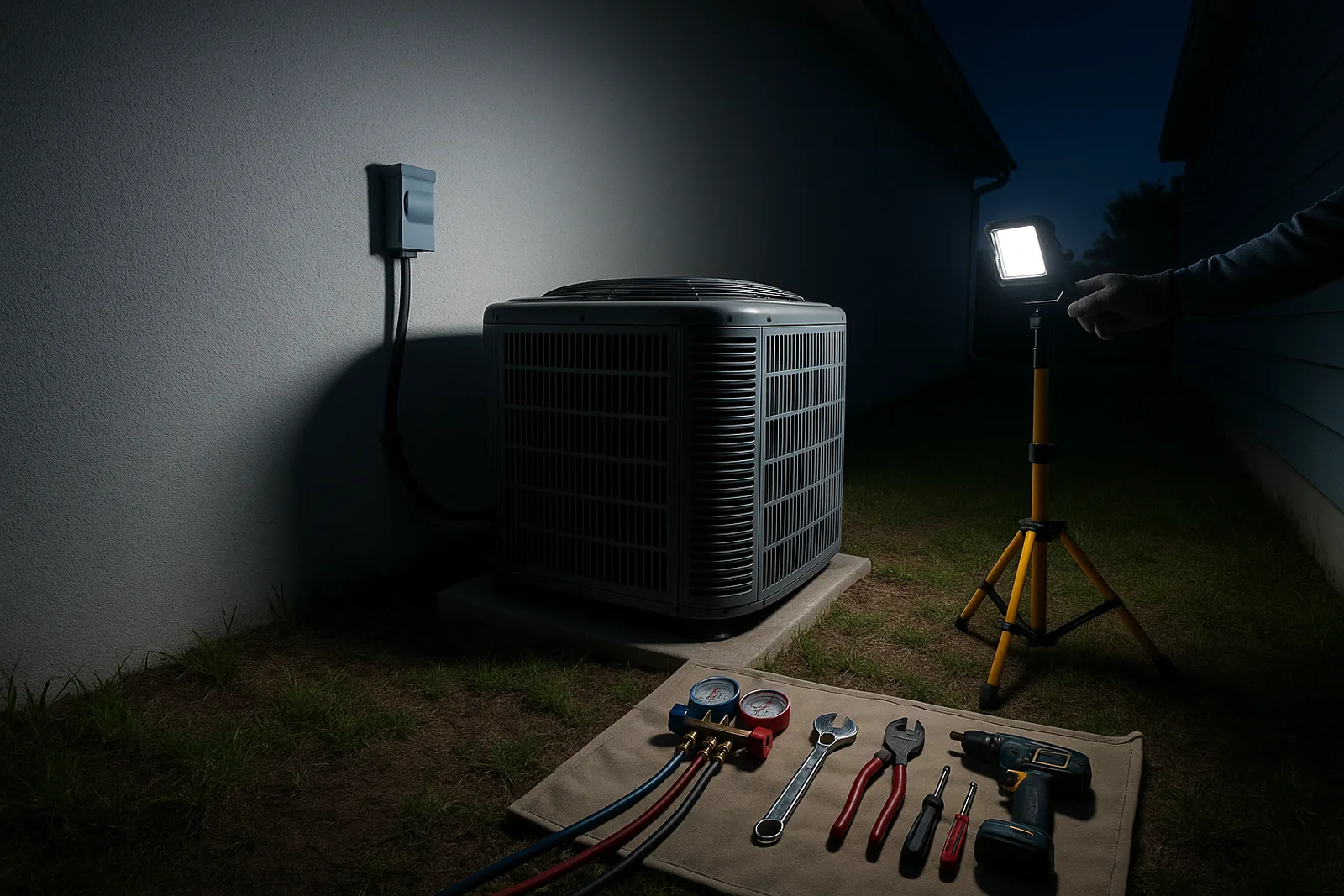
The week after a hurricane is the busiest stretch of our year and the calls that move fastest are the ones with information attached. Have the model and serial numbers off the data plate, a note of whether water reached the unit, and photographs taken before anything was touched. Tell us if the breaker has already tripped or been reset. That handful of details lets a technician arrive with the right parts instead of arriving twice.
- Model and serial numbers from the data plate on the outdoor unit.
- Photographs of the condenser and any water line left on the cabinet.
- Whether the breaker tripped and whether anyone has reset it.
Storm Season AC Inspections in Southwest Florida
Hurricane Season Facts for a Southwest Florida AC System
Hurricane Season AC Questions Southwest Florida Homeowners Ask
Should I turn my AC off before a hurricane?
Yes. Set the thermostat to off first, then switch off the breaker for the air handler and the breaker or outdoor disconnect for the condenser. Voltage sags as the grid degrades and a compressor trying to start on low voltage is where most storm damage to equipment happens.
Is it safe to run my AC after the condenser has been under water?
No. If flood water reached the electrical components or the compressor terminals, do not energize the unit. Salt and brackish water leave conductive residue and silt settles into motors and boards. It needs to be opened, inspected and dried before anyone decides what is serviceable.
How long should I wait to turn the AC back on after the power returns?
Turn the breakers on with the thermostat still off and leave it that way for a while so the crankcase heater can drive refrigerant back out of the compressor oil. Then set the thermostat to cool and expect cold air within ten to fifteen minutes.